BTS: What It Takes to Create a 3D Video That Turns Complexity into Clarity
March 10, 2026
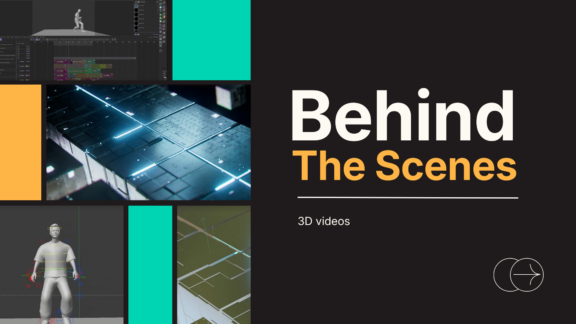
Quick Answer: Creating a 3D video is about far more than impressive visuals. When done strategically, it helps B2B brands turn complex products, processes, and data into clear, story driven narratives that drive real business results. In this behind the scenes look, we break down how Digital Brew approaches 3D video from strategy to final render so your investment fuels pipeline, not just pixels.
- Why 3D Video Is a Strategic Business Tool, Not Just Eye Candy
- When 3D Video Is the Right Choice for Your Brand
- The Strategy Behind Every Great 3D Video
- From Script to Storyboard: De Risking Your 3D Video
- Building the World: Modeling and Design in 3D Video
- Animation That Educates, Inspires, and Connects
- How 3D Video Supports Sales and Pipeline
- Timeline and Budget: What Impacts a 3D Video Project
- Common Mistakes to Avoid in 3D Video Production
- Measuring the ROI of Your 3D Video
- Wrap Up: Key Takeaways for B2B Marketers
- FAQs
Every B2B marketer knows the moment.
You are launching a sophisticated product. Maybe it is a technical platform, a piece of equipment, or an invisible workflow powered by code. You know it is powerful. You know it is differentiated. But explaining it clearly feels almost impossible.
That is where 3D video enters the picture.
It gives you the power to visualize what cannot be filmed. It lets you show internal mechanisms, digital processes, and future state transformations in ways live action simply cannot. But here is the truth. Without strategy and story, even the most beautiful 3D animation will not move the needle.
In this post, we are pulling back the curtain on what it really takes to create a 3D video that turns complexity into clarity and drives measurable business outcomes.
Why 3D Video Is a Strategic Business Tool, Not Just Eye Candy
It is easy to be impressed by dynamic lighting, realistic textures, and cinematic camera moves. But your CFO is not approving budget for visual flair. They are investing in results.
Research from HubSpot shows that 91 percent of businesses use video as a marketing tool. That means your audience expects video. The question is not whether to use it. The question is how to use it strategically.
A well crafted 3D video does three critical things:
- Makes abstract or invisible processes tangible
- Demonstrates product functionality in a controlled environment
- Elevates brand perception through polish and clarity
The right video does not just get views, it drives action. When 3D video is aligned with business goals such as sales enablement, product adoption, or investor communication, it becomes a growth asset.
When 3D Video Is the Right Choice for Your Brand
You should consider 3D video when:
- Your product has internal mechanisms that are impossible to film
- You need to show how digital systems interact behind the scenes
- You want to visualize future state outcomes
- You are launching something highly technical to a skeptical audience
Imagine your sales team heading into Q4 with a 3D animation that shows exactly how your solution integrates into a customer’s environment. Instead of static slides, they have a visual narrative that answers questions before they are asked.
That is how you turn complexity into clarity.
The Strategy Behind Every Great 3D Video
Before a single model is built, we start with strategy.
At Digital Brew, we begin with discovery. Who is the hero of this story. What pain are they experiencing. What changes for them after adopting your solution.
Harvard Business Review reports that 64 percent of executives say storytelling helps them better remember content. That matters for marketers because memorability influences buying decisions.
In 3D video, it is tempting to lead with features. Instead, we lead with tension and resolution. We frame the product as the guide that helps the hero succeed.
This foundation ensures your 3D animation is not a product demo in disguise. It is a narrative designed to move buyers forward.
From Script to Storyboard: De Risking Your 3D Video
One of the biggest misconceptions is that the magic happens in rendering. In reality, it happens in pre production.
Scriptwriting comes first. We translate technical language into clear, conversational messaging. We focus on one primary takeaway and structure the story around it.
Then we build detailed storyboards. These visual blueprints show camera angles, transitions, and key 3D moments before any heavy production begins.
Why does this matter for marketers.
Because production can be resource intensive. When you align on script and storyboard early, you dramatically reduce revision cycles, protect timelines, and safeguard budget.
Clarity up front saves cost on the back end.
Building the World: Modeling and Design in 3D Video
Once the story is locked, we move into modeling and design.
This is where your product, environment, or system takes shape in three dimensional space. But design is not just about realism. It is about intentional clarity.
We make deliberate choices about:
- How detailed a model needs to be
- What elements should be simplified
- Where color and lighting guide attention
McKinsey found that companies that prioritize design outperform industry peers by 32 percent in revenue growth. For B2B marketers, that insight reinforces a key truth. Design is not decoration. It is differentiation.
In 3D video, strong design ensures your audience focuses on the message, not just the movement.
Animation That Educates, Inspires, and Connects
Animation is where motion brings meaning.
We choreograph camera moves to mirror the emotional arc of the story. Slow reveals build anticipation. Clean transitions signal clarity. Exploded views highlight internal components. Data overlays show measurable impact.
For example, imagine showing a manufacturing machine. Instead of simply rotating it in space, the animation could peel back layers to reveal how efficiency improves at each stage. You are not just showing a product. You are visualizing value.
Viewers retain 95 percent of a message when watching it in video compared to 10 percent when reading text . That statistic underscores why thoughtful animation matters. When your 3D video is clear and narrative driven, it dramatically increases retention.
Retention drives recall. Recall drives action.
How 3D Video Supports Sales and Pipeline
Your marketing team is not the only stakeholder in a project. Sales, product, and leadership all have skin in the game.
A strategic 3D video can support:
- Sales presentations
- Trade show booths
- Website product pages
- Investor pitches
- Customer onboarding
When your 3D video is built with both teams in mind, it becomes a shared asset that drives measurable outcomes.
Imagine your sales rep using a 60 second 3D animation to explain a complex integration. Instead of a ten minute verbal explanation, the visual does the heavy lifting. Conversations shift from confusion to strategy.
That is pipeline acceleration in action.
Timeline and Budget: What Impacts a 3D Video Project
As a marketing leader, you are balancing ambition with resources.
Several factors influence a 3D video timeline and budget:
- Level of model detail
- Length of the animation
- Custom environments versus template based scenes
- Number of stakeholder review cycles
- Integration of voiceover and sound design
The biggest variable is clarity of scope. When goals are clear and feedback is consolidated, projects move faster and smoother.
Our role as a collaborative partner is to guide you through tradeoffs. Do you need hyper realistic textures, or would a stylized approach communicate faster. Is a 90 second video necessary, or could a focused 60 second cut drive stronger engagement.
Strategic restraint often delivers stronger ROI than unchecked ambition.
Common Mistakes to Avoid in 3D Video Production
Over the years, we have seen a few recurring pitfalls.
First, prioritizing visuals over message. Stunning graphics cannot compensate for unclear positioning.
Second, trying to show everything. When you cram every feature into a single 3D video, the result feels overwhelming.
Third, underestimating internal alignment. Without early buy in from product and sales, revisions can spiral.
Digital audiences quickly disengage when content feels cluttered or overly complex. For marketers, this reinforces the importance of focus. Simplicity wins.
Measuring the ROI of Your 3D Video
At the end of the day, performance matters.
Success metrics might include:
- Increased time on page
- Higher demo requests
- Improved close rates
- Shorter sales cycles
- Stronger product adoption
The key is aligning metrics to the original goal. If the objective is sales enablement, measure impact in conversations and conversions. If it is brand positioning, track engagement and perception shifts.
At Digital Brew, we believe every creative decision should connect back to business outcomes. From complex product story to clear, memorable narrative, your video should earn its place in your marketing mix.
Wrap Up: Key Takeaways for B2B Marketers
When grounded in strategy and story, 3D video helps you:
- Visualize the invisible
- Simplify complex systems
- Support sales conversations
- Strengthen brand perception
- Drive measurable business results
The process starts with messaging alignment and story. It moves through thoughtful design and animation. It ends with a polished asset that educates, inspires, and connects.
When you approach 3D video as a business tool rather than a creative experiment, you unlock its full potential.
Let’s Brew This!
FAQs
Most 3D video projects take several weeks to a few months, depending on complexity. Highly detailed models and longer runtimes increase production time. Clear alignment and consolidated feedback help keep timelines on track.
Often, yes. 3D video requires modeling, texturing, lighting, and rendering, which can add production hours. However, when 3D is the clearest way to demonstrate your product, the return in engagement and sales enablement can justify the investment.
Absolutely. Many brands use 3D video for training, onboarding, investor relations, and trade shows. A well produced animation can serve multiple departments and extend its value far beyond a single campaign.
Start by asking whether your audience needs to see something that cannot be filmed or easily explained with slides. If visualizing the invisible would dramatically improve clarity, 3D video may be the right move.