What is VFX?
February 14, 2020
Believe it or not, VFX (aka visual effects) have been around since the 1900s. While modern viewers might not deem a spaceship landing in the eye of the moon real visual effects, films like George Méliès’ “A Trip to the Moon” (1902) were only the humble beginnings of what we call ‘movie magic’.
Early VFX
When you think of visual effects, you probably think of larger than life scenes that were created with the help of a computer. However in Méliès’ case, his simple but effective effects like the one in the video below were actually created with a technique called substitution splice.
While Méliès was truly a pioneer in the early VFX world, visual effects got a decent makeover as technology advanced.
A Jurassic Combination
Take the blockbuster 1994 film, Jurassic Park. Many critics will agree that the visual effects seen in this film, most notably our favorite T-Rex friend, still hold up to today’s standards. That’s because Speilberg decided to get a bit creative with his VFX team and merge two types of visual effect techniques; computer animation and practical effects. You can learn more about that in this video:

So just think of our animatronic dino dude kind of like the Jaws shark got a digital makeover.
Modern VFX Magic
Fast forward 25 years or so, and advancements in AI and other tech have allowed filmmakers to get get away with some visuals that were previously unimaginable. For example, the VFX in Netflix’s “The Irishman” was actually able to reverse time for its three stars, Pacino, Peshi, and DeNiro. Interestingly enough, the VFX team was able to conquer this feat with a program development rather than a horde of animators. You can check out the process here:
How to Create Visual Effects (VFX)
Before diving into the magic, let’s start with the basics: what is VFX? In short, visual effects (VFX) refer to any imagery created, altered, or enhanced for film, television, or digital media that can’t be captured in camera. Whether it’s adding a futuristic city skyline, creating a dragon that breathes fire, or simply extending a background, VFX allows creators to explore VFX beyond the limits of physical production.
The process begins with pre-production, where a VFX supervisor collaborates with directors and cinematographers to plan every shot that needs enhancement. During production, teams capture key data—like camera angles, lighting, and reference plates—to prepare for VFX software work later on. Finally, in post-production, VFX artists bring these elements to life, seamlessly blending real and digital footage to create scenes that feel both grounded and cinematic.
Special Effects vs. Visual Effects: Key Differences Explained
People often use the terms “special effects” and “visual effects” interchangeably—but they’re actually very different. Special effects (SFX) are created physically, right on set. Think explosions, prosthetics, rain machines, or pyrotechnics—all captured directly in camera.
Visual effects (VFX), on the other hand, happen afterward, in the digital realm. Using advanced VFX technology, artists build or enhance visuals that can’t exist in the physical world—like portals, holograms, or alien landscapes. In many productions, both are used together: for example, a small controlled explosion (SFX) can be digitally amplified later with fire, debris, and lighting enhancements (VFX).
So, to define VFX simply: it’s the digital artistry that transforms imagination into believable visuals, turning the ordinary into the extraordinary.
5 Types of Visual Effects (VFX)
When people ask, “what are VFX?” the answer isn’t just one thing—it’s a world of techniques that stretch creative boundaries. From full CGI environments to old-school stop-motion, each style plays a unique role in storytelling. Let’s explore five of the most common forms of VFX used across industries.
1. CGI (Computer-Generated Imagery)
CGI is the most recognized form of visual effects (VFX). It uses 3D modeling and rendering tools like Maya, Blender, or Cinema 4D to design realistic environments, creatures, and products. With the right VFX artists behind it, CGI can make a single product demo look like a cinematic masterpiece.
CGI’s creative potential lies in its limitless flexibility—it allows studios to build entire universes from a single image, animate lifelike characters, or produce branded content that feels straight out of a feature film.
2. Compositing and Green Screen Effects
VFX compositing is the process of combining multiple elements—like live footage, digital backgrounds, and effects—into one cohesive frame. This is where VFX artists work their magic, using VFX software such as Nuke or After Effects to match lighting, color, and motion.
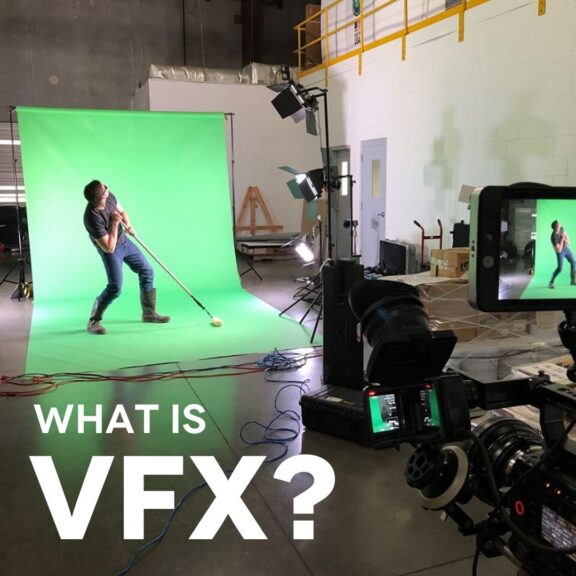
By shooting actors against a green screen, creators can create scenes set anywhere—from the surface of Mars to a bustling futuristic city—without ever leaving the studio. Compositing opens endless storytelling doors, making impossible worlds look entirely believable.
3. Motion Capture (MoCap)
Motion capture (MoCap) uses sensors to record real human movement and translate it into digital animation. It’s a perfect marriage of performance and technology, capturing every subtle gesture and emotion.
MoCap enables VFX artists to bring digital characters to life with realism that traditional keyframing can’t match. It’s how studios explore VFX that blurs the line between actor and avatar, from blockbuster heroes to training simulations and branded virtual experiences.
4. Digital Matte Painting
Before 3D environments took over, filmmakers relied on matte paintings—large, hand-painted backdrops—to extend or replace real locations. Today, digital matte painting builds on that tradition using VFX software and 3D modeling tools to design hyper-realistic landscapes and cityscapes.
This technique lets VFX artists create scenes that would be too costly or impossible to shoot—like a fantasy mountain range or an apocalyptic skyline. It’s artistry and technology combined into a single breathtaking frame.
5. Stop-Motion Animation
Stop-motion might be the oldest trick in the book, but it remains one of the most creative ways to explore VFX. The process involves photographing real objects frame by frame and moving them slightly between each shot, producing the illusion of motion.
While not digital in the traditional sense, modern VFX artists often enhance stop-motion using subtle double exposure or compositing techniques to blend analog charm with digital polish. It’s a tactile, imaginative style that celebrates craft, patience, and the magic of movement—proving that innovation doesn’t always mean pixels.
What Can Digital Brew Do for You?
As you can see, VFX isn’t child’s play. It takes a lot of knowledge and the right equipment to produce astonishing, believable visual effects. Of course, you know where you are, so you’re probably expecting us to brag about some of the VFX work we’ve done.
Well you’re right. Congratulations.
Blinker
Digital Brew teamed up with Ringling College of Art and Design to do realistic visual effects for a TV commercial.
Gamefly
We got to combine our top quality 4K photography with composited motion graphics in this video for Gamefly.
The Warrior
This entire video was filmed inside an apartment living room. That’s the power of VFX for you.
Benelli
One of our newest VFX projects… pretty sick if we do say so ourselves.
What do you say? Wanna learn more about VFX and how it can add an extra kick to your videos?
Frequently Asked Questions (FAQs)
What is VFX and how is it used in films?
VFX, or visual effects, are digitally created or enhanced images that can’t be achieved through standard filming methods. In films, VFX technology allows creators to build entire worlds, creatures, and action sequences that would be impossible—or too dangerous—to shoot in camera. Whether it’s a subtle weather effect or an intergalactic battle, VFX artists use specialized VFX software to blend digital and live-action footage seamlessly. The goal is to make audiences believe in the unbelievable.
What are VFX techniques commonly applied in movies and TV?
There’s no single answer to what are VFX—it’s a combination of techniques working together. Common ones include CGI (Computer-Generated Imagery) for creating digital objects or characters, VFX compositing for merging layers of visuals, motion capture for realistic character movement, and digital matte painting to extend or enhance environments. These tools help filmmakers create scenes that transport viewers anywhere, from ancient cities to futuristic galaxies.
How do you define VFX compared to special effects?
If you had to define VFX, it’s the art and science of enhancing visual storytelling through computer-generated imagery. Special effects (SFX), on the other hand, happen physically on set—think pyrotechnics, rain machines, or prosthetics. Visual effects (VFX) are created after filming, using digital methods to augment or replace real elements. While SFX rely on physical craftsmanship, VFX depend on digital artistry, and when combined, they bring incredible realism to film and television.
What is a VFX artist’s role in production?
VFX artists are the digital storytellers behind the screen. Their job is to take a director’s vision and translate it into believable imagery—whether that means compositing green screen footage, modeling 3D characters, or animating visual environments. They work closely with the VFX supervisor and production team to ensure every effect aligns with the lighting, tone, and narrative. From pre-visualization to final polish, VFX artists are the bridge between imagination and execution.
What are VFX trends shaping the future of filmmaking?
The world of visual effects (VFX) is evolving faster than ever. Real-time rendering tools like Unreal Engine are revolutionizing how studios explore VFX, allowing creators to preview effects instantly. Virtual production—made famous by The Mandalorian—is merging in camera technology with digital backdrops, blurring the lines between physical and virtual worlds. AI-assisted rotoscoping, 3D scanning, and cloud collaboration are empowering VFX artists to push the boundaries of creative potential while keeping production agile and cost-efficient.
In short, the future of VFX is more immersive, accessible, and imaginative than ever before.