History of Animation: From Magic Lantern to CGI Evolution
November 17, 2020
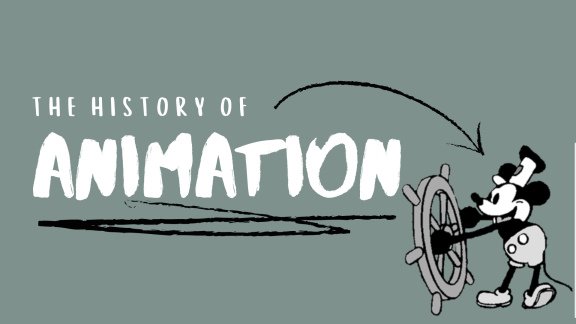
We thought we’d take a break from our typical marketing blogs to bring you some rad facts about the history of animation, and how it’s evolved from early creations like this.

Well, it all started with a “fantasmagoric” film.
Early Animation
The very first animated “film” was by a french cartoonist named Émile Cohl. He’s often seen as the father of animation because of his 1908 film, Fantasmagorie, which features a playful cast of hand-drawn characters that are up to no good. This was the first film with this unique animation style, which involved drawing on an illuminated glass plate. The next drawings in the animation were traced from the last frame so it was easy to tell what image was necessary to create a fluid movement once the static images spun around quickly.
Another early animation pioneer was Winsor McCay, another cartoonist from Canada. His feature animated film from 1914, Gertie the Dinosaur, was the first animated film to feature character development. It was also the first animated film to combine animation and live action. Bonus fact: McCay hand drew every frame in this film, which was over 1,000.
https://www.youtube.com/watch?v=TGXC8gXOPoU&t=5s
Golden Age & Feature-Length Breakthroughs
Let’s fast forward a few years, and meet one of the best-known animators in history, Walt Disney. While he may be best known-for his ground-breaking amusement parks, we’re here to talk about his animation.
It should be no surprise that Mr. Disney was one of the most important pioneers of animation. With 22 Oscars, two Golden Globes, and an Emmy, Disney holds the record for the most Academy Awards earned by an individual.
Arguably, Walt Disney is best known for his first feature-animated film, Snow White and the Seven Dwarfs. It was the first animated feature film in both full color and sound, and cost Disney three times his original budget; $1.5 million.
Disney’s goal was to make the film as realistic as possible, both in animation and sound. To achieve this, the studio developed something called a multiplane camera, where multiple glass panes could be used to create an illusion of depth. Check out the ground-breaking camera at work:
Advancements & Modern Evolution
One name that should really stick out to most people when it comes to this Era of animation is Pixar. Specifically, Pixar’s Toy Story, as it was the first feature-length film to use all CGI to animation.
Pixar needed a total of 117 computers running 24/7 to fully render the final product of Toy Story. They even created their own software in order to render the entire 77 minutes of animation, called Renderman.
Which only becomes more impressive when comparing the very first Toy Story movie, to the most recent one, Toy Story 4.
Transition From Hand-Drawn to Digital Animation
For much of animation history, traditional animation was the standard. Artists relied on hand-drawn frames, painted cels, and painstaking photography to bring stories to life. This process defined the early animation industry and produced timeless feature length animation, but it also required enormous time, labor, and resources.
As technology advanced, new animation techniques began to reshape the workflow. Studios started digitizing hand-drawn artwork, allowing computers to handle coloring, layering, and camera movement. This hybrid approach marked a major shift in animation history, blending the artistry of traditional animation with the efficiency of computer animation.
By the late 1990s and early 2000s, many studios transitioned fully to digital pipelines. While the tools evolved, the foundational principles that invented animation (timing, motion, and storytelling) remained unchanged. Digital tools simply gave animators more flexibility, consistency, and creative control as the animation industry continued to grow.
The Beginning of CGI in Animation
The rise of CGI was a gradual evolution rather than an overnight breakthrough. Early computer animation experiments appeared in short films, commercials, and visual effects, often supporting hand-drawn scenes rather than replacing them. These early efforts demonstrated how computers could enhance animation techniques by adding depth, lighting, and realistic movement.
In the 1980s and 1990s, studios like Pixar pushed the boundaries of what computer animation could achieve. Their short films laid the groundwork for the first fully computer-animated feature film, proving that audiences could emotionally connect with digital characters just as strongly as hand-drawn ones.
This innovation ultimately led to major milestones in feature-length animation, redefining production pipelines across the animation industry. CGI didn’t replace creativity; it expanded it. By combining storytelling traditions with advanced technology, computer animation became one of the most influential forces shaping modern animation history.
How We Do It
Of course, we have a deep love for the classic hand-drawn animation, but now-a-days, it’s just not practical. So, at Digital Brew, we use computer animation to render and bring your brand stories to life. If you want to know what a day in the life of a Digital Brew animator looks like, you can check it out here.
Who Invented Animation?
The invention of animation wasn’t a single moment. It was a series of imaginative steps. While ancient shadow puppetry and optical illusions like the zoetrope laid the early groundwork, the person most often credited with inventing modern animation is Émile Cohl.
In 1908, Cohl released Fantasmagorie, a surreal black-and-white film made up of roughly 700 hand-drawn images. Each frame was traced over the previous one on backlit paper to simulate motion. This method introduced a visual storytelling technique that would influence generations of animators to come. Though primitive by today’s standards, it marked a critical turning point in the birth of frame-by-frame animation.
The Evolution of Animation
Animation evolved rapidly over the last century, transforming from novelty to art form to entertainment powerhouse. Here’s a quick breakdown of the major eras:
Silent Era (1900s–1920s): Simple black-and-white shorts like Gertie the Dinosaur set the stage for narrative animation.
Golden Age (1930s–1950s): Studios like Disney and Warner Bros. created feature-length classics such as Snow White and Bambi, pioneering synchronized sound, color, and personality-driven characters.
Television Boom (1960s–1980s): Saturday morning cartoons and syndicated animated shows like Scooby-Doo and The Flintstones brought animation into everyday life.
Digital Age (1990s–2000s): Pixar’s Toy Story introduced fully computer-generated imagery, reshaping the industry.
Modern Era (2010s–Today): With the rise of streaming platforms, international studios, and hybrid styles, animation is more diverse, accessible, and innovative than ever.
Each new era introduced tools, techniques, and styles that built on the last, pushing the boundaries of what animation could do.
The Growth of the Animation Industry
What began as a niche artistic experiment is now a multi-billion-dollar global industry. Animation is no longer just for children. It powers blockbuster films, marketing campaigns, educational tools, social media, video games, and virtual reality experiences.
A few key trends that shaped this explosive growth:
Streaming platforms like Netflix, Disney+, and Crunchyroll have invested heavily in original animated content.
Advancements in software and remote workflows have made animation faster, more collaborative, and more scalable.
Branded storytelling has become a go-to strategy for businesses using animation to explain, sell, or engage.
International studios and cross-cultural storytelling have expanded the reach and richness of animated narratives.
From indie creators to major studios, animation is now one of the most flexible and powerful storytelling formats in the world.
New-Age Animation Trends
Modern animation is no longer defined by a single style or technique. Today’s animation industry thrives on experimentation, blending old and new methods to create visually striking and emotionally engaging content. With advancements in software and rendering technology, animators have more freedom than ever to push creative boundaries while still honoring the fundamentals of animation history.
These new-age trends reflect a shift toward flexibility, efficiency, and artistic individuality, allowing studios to choose the animation techniques that best serve each story rather than conforming to a single production model.
Hybrid Animation Styles in Today’s Films
One of the most exciting trends in modern animation is the rise of hybrid animation styles. These projects combine traditional animation principles with computer animation, creating a layered visual experience that feels both familiar and fresh.
Many contemporary films blend hand-drawn elements with 3D environments, digital effects, or CGI characters. This approach allows animators to preserve the expressive charm of traditional animation while leveraging the depth, lighting, and camera movement made possible through computer animation. Hybrid workflows also streamline production, making feature length animation more efficient without sacrificing creativity.
From blockbuster releases to independent films, hybrid animation has become a powerful storytelling tool, proving that innovation in the animation industry often comes from combining techniques rather than replacing them.
The Return of Modern 2D and Stylised Animation
While CGI continues to dominate much of the animation industry, modern 2D and stylised animation has made a strong comeback. Audiences are increasingly drawn to bold visuals, artistic risk-taking, and designs that stand out from hyper-realistic styles.
Today’s 2D animation often uses digital tools to enhance traditional animation workflows, allowing for smoother motion, richer color palettes, and faster production times. These updated animation techniques make 2D more scalable and accessible, especially for television, streaming platforms, marketing, and educational content.
This resurgence proves that animation isn’t about abandoning the past, it’s about evolving it. By reimagining classic styles with modern tools, animators continue to expand what animation can look like while honoring the roots that invented animation.
The Future of Animation
The future of animation will be shaped by technology, accessibility, and storytelling innovation. Advances in real-time rendering, AI-assisted workflows, virtual production, and immersive media are already changing how animation is created and consumed.
As computer animation tools become more powerful and user-friendly, creators of all sizes can produce high-quality content faster than ever. This shift opens the door for more diverse voices, global collaboration, and new forms of feature length animation across film, marketing, education, and interactive media.
Despite constant technological change, the heart of animation remains the same. Strong storytelling, clear communication, and emotional connection will always drive successful animation—no matter how the tools evolve. And as the animation industry moves forward, it will continue building on the creative foundations laid throughout animation history.
Conclusion
From hand-drawn magic to hyper-real CGI, the story of animation is one of constant reinvention. It’s a medium born from experimentation and shaped by technology, creativity, and a desire to bring imagination to life.
At Digital Brew, we’re proud to stand on the shoulders of pioneers like Cohl, McCay, Disney, and Lasseter, and continue the tradition of using animation to tell stories that connect, entertain, and inspire. Whether you’re building a brand video, explainer series, or full campaign, animation still reigns as one of the most engaging tools in your arsenal.
Frequently Asked Questions (FAQs)
Who made the first animation?
The first recorded animated film was Fantasmagorie (1908), created by French artist Émile Cohl. It featured hand-drawn, frame-by-frame motion that laid the foundation for modern animation.
Who is considered the father of animation?
Émile Cohl is often called the father of animation due to his pioneering work in the early 1900s. Winsor McCay also played a significant role in shaping the medium with works like Gertie the Dinosaur.
What was the first animated character created?
The main character in Fantasmagorie is considered the first recognizable animated character. Later, Felix the Cat became one of the first internationally recognized animated stars.
When did feature-length animation begin?
The first known feature-length animated film was El Apostol (1917) in Argentina. However, Disney’s Snow White and the Seven Dwarfs (1937) was the first commercially successful full-length animated feature in color and sound, setting a new industry standard.
And, as always, if you have questions about animation, or want to learn more about our process, you can always pick a time to chat with us here!